Lupine Publishers | Open access Journal of Complimentary and Alternative Medicine

NADA arose from a community response to inequities. NADA calls on the
acupuncture community to support such community-based responses now. In
the early 1970s, young activists in New York City agitated for change.
Collectives comprised of many civic-minded activist organizations led by
the Puerto Rican Young Lords Party called out systematic racism and
oppression including the effects of social injustice upon the health of
the people of color in the South Bronx. The actions of the Young Lords
Party, the Black Panther Party, White Lightning, and others addressed
many health-related concerns: trash collection, lead and tuberculosis
screening, food insecurity, incarceration conditions and addiction. The
movement was political and focused on social justice.
The South Bronx city hospital, Lincoln, called “the butcher shop” by
locals, was not responsive to the call for help with the rampant heroin
epidemic. So, in late 1970, the “Think Lincoln Committee” launched a
surprise takeover and protest occupation of the Nurses’ Residence.
Subsequent negotiations led to the creation of the Lincoln Detox
Program, staffed with those same community members as well as
progressive medical professionals. The program initially offered a
short-term methadone detoxification intervention and had 200 people
lined up on the first day. Until then, the only available treatment was
forced methadone maintenance. The focus of Lincoln Detox was on social
justice and the need for political education, engagement, and political
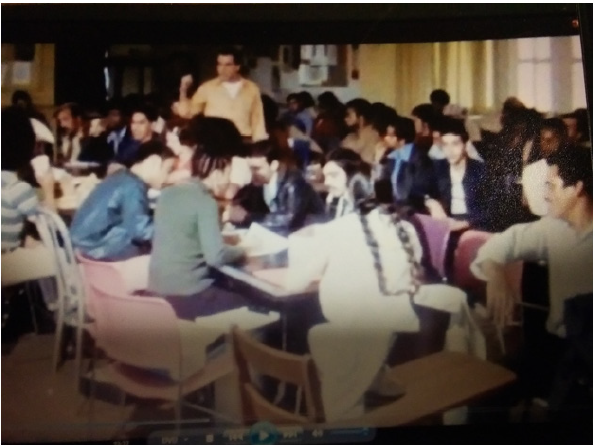
healing in addition to individual health concerns (Figure 1 & 2).
Figure 1.
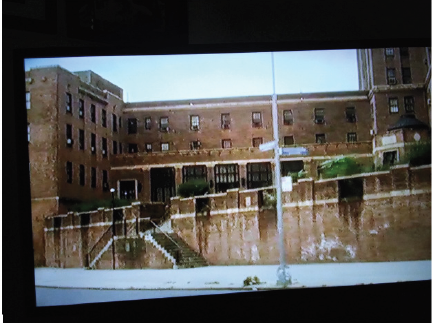
Figure 2.
Soon concerns about methadone as a chemical means of
control and the challenges of methadone detoxification prompted
the group to look for more Wholistic alternatives. Several activist
staff members, including Mutulu Shakur and Walter Bosque Del
Rio, went to Chinatown and hired an acupuncturist, who taught
them to needle one ear point. Bosque Del Rio explained that the
seminal Lincoln team, partially self-taught, pioneered the start of
what is now known as the NADA protocol. The late Michael O. Smith
completed the five-point combination in a collaborative effort of
the treatment community and the persons getting care. Thousands
of people were detoxed, and methadone was eventually dropped.
The ear acupuncture success gained international attention. Over
time, the NADA protocol has continued to undergo substantial
refinement based on client feedback, staff observations and largevolume,
wholistic clinical outcomes.
Several of the Lincoln members, including Smith, pursued
further Traditional East Asian Medicine studies in Canada, China,
and Shri Lanka, becoming full-body acupuncturists. Shakur along
with Bosque Del Rio, Oscar Wexu and Mario Wexu, established an
acupuncturist training program at Lincoln, one of, if not the first
in the United States. Louis Surita (Zubair), Shakur and Bosque
Del Rio “ran the Acupuncture Collective, the clinic and the Lincoln
Acupuncture School from 1972-1978,” recalled Bosque Del Rio.
After leaving Lincoln, Shakur created the Black Acupuncture
Advisory Association of North America (BAAANA) and the Harlem
Institute of Acupuncture. Bosque Del Rio became the Assistant
Director of the Tri-State Acupuncture Institute and later served on
the board of Tri-State College of Acupuncture.
Bosque Del Rio relayed that the city eventually took over,
transferring the activists to other methadone programs that
were not using acupuncture or political education. Lincoln Detox
continued, without the militant political orientation, to provide
ear acupuncture-based treatment, under Smith’s leadership. As cofounder
of the NADA organization and ongoing Medical Director of
what became Lincoln Recovery Center Smith kept the movement
alive and facilitated broad adoption.
Carlos Alvarez became the primary NADA trainer sharing
the NADA ear acupuncture and style of treatment. Nancy Smalls
designed a ground-breaking maternal program with comprehensive
services including peer counselors. Alvarez pointed out that over
time more and more social workers and counselors, as well as
acupuncturists, came and learned the Lincoln style of treatment,
taking it back and applying it to their own communities. Alvarez
noted, “We went through a series of epidemics: heroin, crack/
cocaine, AIDS, Hepatitis C, 1970s – 80s – 90s and on, with acudetox
and supportive services.”
Honoring these roots, NADA has always focused on the
underserved and marginalized. The “Spirit of NADA” is service.
The NADA protocol-a style of engagement and care that includes a
simple ear combination, often delivered in groups-works well not
only for addiction and mental health conditions, but also in disaster
response and emotional trauma healing, fostering dignity, hope
and resiliency. NADA practitioners, including non-acupuncturists
from various disciplines, continue to bring support to people in
behavioral health, criminal justice, community initiatives and
settings around the world. Many organizations adopt the NADA
protocol as a tool for humanitarian aid and social justice. NADA has
diverse leadership and membership, reflecting the people we serve.
Unfortunately, NADA has often met with fierce opposition from
acupuncture organizations. In contrast, however, licensed acupuncturists as individuals have been quite supportive and actually
comprise 40% of the general NADA membership. The majority of
NADA members are representative of the multidisciplinary healthcare
mainstream, including biomedical, social service, psychotherapy,
peer counseling, public health, substance misuse, criminal
justice, and integrative treatment providers. Collectively and for
decades the general NADA membership has led the way in demonstrating
what informed integrated care looks like and in proving
the many benefits that can accrue from adopting the principles of
NADA-style care.
In this moment, we face both the collective, acute trauma of
a pandemic that is affecting lives and livelihoods and the chronic
trauma of systematic, structural racism and oppression. Our
nation needs what NADA can contribute-group response to group
trauma. NADA offers a wholistic approach to a mental health
system unequipped to address the overwhelming despair that has
brought us to epidemic levels of addiction, anxiety and depression.
NADA stands behind utilizing our protocol for the empowerment of
historically oppressed peoples, preferabl delivered by those same
peoples.
People of color and other marginalized communities face
unnaturally high levels of stress-exposure and multi-generational
trauma that can predispose, precipitate, and perpetuate a host of
short-term and long-term adverse, severe and too often deadly
physical and mental health concerns. The denial of basic rights to
equality as a United States citizen and inalienable rights as a human
being is unconscionable. The right to healthcare is a critical part
of this calculus. NADA protocol specifically is a safe and effective
method that can help programs, providers, and patients to cope
better with these ill effects. The NADA protocol is especially notable
for its extremely low risk of adverse outcomes, which creates a
potential benefit-to-risk ratio that is absolutely unmatched by any
pharmaceutical or other somatic intervention currently available.
In closing, the authors emphasize that an analysis of the Lincoln
experience can inform how best to respond to the social unrest
that is now manifesting across the country and across color and
socio-economic lines in support of Black and Brown lives. Coming
full circle, explosive social unrest has returned to challenge us
here in the US. The “Spirit of NADA” stands as a time-tested model
for effectively addressing that challenge with the integrity and
inclusiveness that it deserves.
The iconic concept of the “Barefoot Doctor” is one often held up
as a model of unselfish service. NADA invites the local, state, and
national acupuncture organizations to actively support the NADA
mission and goals as a manifestation of that kind of service. The
widespread use of the NADA protocol by non-LAc NADA-trained
frontline, community-based Acupuncture Detoxification Specialists
(ADSes) offers one of the very best hopes of sufficient, appropriate,
culturally relevant, and on-going access to care. Even California’s
roughly 18,000 licensed acupuncturists could not begin to touch
the need in that state. Furthermore, the widespread use of the
NADA protocol by non-LAc providers in states with NADA-inclusive
legislation supports the Traditional East Asian Medicine (TEAM)
profession by spreading acupuncture awareness and goodwill.
Broad-based support of NADA ADS inclusions in all 50 states can
indeed be a win for all.
Follow on Twitter: https://twitter.com/lupine_online
https://lupinepublishers.com/complementary-alternative-medicine-journal/fulltext/back-to-the-future-the-national-acupuncture-detoxification-association.ID.000143.php


