Showing posts with label Lupine Publishers. Show all posts

Tuesday, September 6, 2022

Calligraphic Handwriting (CCH) Effects on Moods and Anxiety of Type II Diabetes Patients


Background

Hypertension is one of the most common worldwide diseases afflicting humans. It is a serious condition that can lead to coronary heart disease, heart failure, stroke, kidney failure, and other health problems (National Institutes of Health, 2008). People who have hypertension can take steps to control it and reduce their risks for related health problems. Key steps include following a healthy lifestyle, having ongoing medical care, and following the treatment plan that the doctor prescribes. Most people who have hypertension will need lifelong treatment. Despite progress in prevention, treatment, and control of high blood pressure, hypertension remains a major public health challenge Whelton, et.al [1].

The etiology of hypertension is multifactorial, involving genetic factors, biophysiological processes, daily experiences throughout life. Some psychosocial factors, such as the Type A behavior pattern, anxiety, and depression, also play a significant role in the etiology of hypertension, which is supported by many epidemiological investigations Krantz, et.al.[2]; Markovitz, et.al.[3]; Spicer et.al. [4]. Yan et.al. [5] followed 3,308 adults with normal blood pressures, ages 18 to 30 years, for fifteen years for the development of high blood pressure. This study gives strong support to the role of psychological characteristics in the development of high blood pressure.

Chinese Calligraphic Handwriting (CCH) is a WHO Fancourt et.al. [6] recognized effective treatment. Its training can enhance the practitioner’s cognitive abilities, relax his bodily conditions, and stabilize his emotions. Its practice in general can also lead to serene, stable, comfortable, and quiet emotional states. These changes are indicated by the participant’s physiological changes. For example, their heart rate slows down, blood pressure decreases, and digital pulse volume also increases with corresponding reduction in EMG. In addition, greater control of breathing takes place during brush writing than do their normal resting breathing, etc. Kao et.al.[7].

Furthermore, long-term calligraphic practice can exert a subtle effect on one’s personality Kao et.al.[8]; Henry et.al.[9]. To examine the effects of calligraphic activities on the traits of human personality, we studied the relationship between CCH writing experience and traits of personality by the factors from the 16- Personality Factors (16 PF) was administrated to in practising adults and children. Results showed that CCH training can shape and change children and adults’ personality to a more mature state, including being more emotionally stable, conscientious, self-sufficient, controlled and with heightened learning ability. On basis of the above observations, we carried out an experiment to see if CCH training would be able to clinically treat hypertensive patients who were comorbid with both the trait of introversion and the traits of Type A personality. We expected that the CCH training would lead to significant reduction in the subjects’ blood pressure to be indexed by the Systolic and Diastolic blood pressures.

Read more about this article: https://lupinepublishers.com/complementary-alternative-medicine-journal/fulltext/calligraphic-handwriting-effects-on-type-a-personality-of-hypertensivepatients.ID.000158.php


Read more 
Lupine Publishers Google Scholar Articles : https://scholar.google.com/citations?view_op=view_citation&hl=en&user=0sWAIssAAAAJ&citation_for_view=0sWAIssAAAAJ:pyW8ca7W8N0C

Thursday, September 1, 2022


Abstract

Background

Chinese Calligraphic Handwriting (CCH), a WHO (2019) recognized effective treatment, enhances our cognitive abilities, relaxed bodily conditions and stabilized emotions. It has successfully treated the emotion-related anxieties and the moods that are associated with several diseases and disorders. The present study tested this intervention on Diabetes patients.

Method

16 type II diabetes patients and 16 healthy subjects participated. Each group performed both the CCH tasks of brush handwriting of Chinese characters and the brush drawing of geometric patterns. The Chinese versions of STAI and POMS measured the effects of brush writing and brush drawing tasks. on the participants. Both scales were administered to all participants before and after a 40-minute training session.

Findings

The patients group significantly improved on Pre-Post measures of the STAI in both the brush writing (F= 11.97; p=0.004) and brush drawing (F=14.08, p=0.002) tasks. However, the healthy subjects group also showed similarly a pre-post significant effects on the STAI scores from the brush writing (F = 32.02; p = 0.000) and the drawing tasks (F= 14.05, p=0.002).

Moreover, both groups showed a significant reduction in the postforms states of Tension-Anxiety, Depressed-Dejection and Confusion-Bewilderment in the brush writing task (P<0.001), but only Tension-Anxiety and Depressed-Dejection in the brush drawing tasks (P<0,001), The reduction in each case from the patient groups is greater than that from the healthy subject’s group (0.001).

Interpretation

The Brush Writing and Brush Drawing as treatments have shown significant improvements in STAI and some POMS states of the practicing Type II diabetes patients.

Read more about this article: 

https://lupinepublishers.com/complementary-alternative-medicine-journal/fulltext/calligraphic-handwriting-(-cch-)-effects-on-moods-and-anxiety-of-type-ii-diabetes-patients.ID.000157.php

Read more Lupine Publishers Google Scholar Articles : https://scholar.google.com/citations?view_op=view_citation&hl=en&user=0sWAIssAAAAJ&citation_for_view=0sWAIssAAAAJ:pyW8ca7W8N0C

Thursday, August 25, 2022

Complementary Medicine in Cancer Patients in The View of Health Literacy


Abstract

While nowadays anticancer therapies had gone through fundamental changes, health care providers must pay attention to the emerging utilization of dietary supplements, functional foods and further complementary and alternative therapies. The appropriate health literacy is a key element in the management of cancer patients’ life too, so it has worthwhile implication in the questions of complementary and anternative therapies. Hence, we wanted to measure the food supplements, functional foods and such agent’s utilization and basic knowledge about them in the Semmelweis University Oncology Center. To our questionnaire 71 patients answered. Due to their knowledge about their antitumor therapies, we divided participants to two groups (N=41 for those, who know their therapies; N=30 for those, who do not know it). However, only 43.9% of those, who know their therapies were precise about it, but grouping was not modified by this data. Tendentious differences were seen between the two groups in the vitamin and/or mineral containing food supplements, herb and/or mushroom containing food supplements, functional foods, special diets, utilization of homeopathy, but significantly more people tried deuterium depleted water in the group of those, who know their therapies. All in all, the type of food supplements etc. seems to be a more prominent factor where from the patient heard about it, in the further sources of information, and in the procurement. Still, health care professionals have a significant role in the good patient education and health literacy, because patients better ask their physician about these products while they mainly purchase them in pharmacies, hence pharmacists have a noteworthy role in the revision of harmful therapies.


Read more about this article : https://lupinepublishers.com/complementary-alternative-medicine-journal/fulltext/complementary-medicine-in-cancer-patients-in-the-view-of-health-literacy.ID.000156.php

Read more Lupine Publishers Google Scholar Articles : https://scholar.google.com/citations?view_op=view_citation&hl=en&user=0sWAIssAAAAJ&citation_for_view=0sWAIssAAAAJ:D03iK_w7-QYC

Friday, August 19, 2022

A Reflection on Yoga, Acupuncture and Medicine


Introduction

In the 20th Century a great effort has been made both to prove that yoga and acupuncture (i.e., Chinese medicine) can be used for health-related purposes and to discover the functional mechanisms of both systems. From the Western point of view, when both yoga and Chinese medicine became popular as a Complementary and Alternative Medicine (CAM) a resistance became perceptible that led to regulation of CAM (CAMDOC Alliance, 2010). The main issue is that Western and Eastern medicine have a different approach to both health and treatment of illness.

In case of yoga, it has to be stated that it was not conceived as a medical system, but as a system for the discovery of the ultimate goal of humans – Self-realization. Thus, its methods – though there are a great number of yoga traditions – are directed to this aim. Nevertheless, hatha yoga has a strong emphasis on health and has a wonderful spectrum of procedures for arriving at a health status that enables intensive pursuing of the said ultimate goal manifested as samadhi that follows from the cessation of the activities of chitta – the substance of mind/mindfield. The result stated in Patanjali Yoga sutra (PYS) is:


Read more about this article :https://lupinepublishers.com/complementary-alternative-medicine-journal/fulltext/a-reflection-on-yoga-acupuncture-and-medicine.ID.000155.php

Read more Lupine Publishers Google Scholar Articles : https://scholar.google.com/citations?view_op=view_citation&hl=en&user=0sWAIssAAAAJ&citation_for_view=0sWAIssAAAAJ:a0OBvERweLwC

Friday, October 16, 2020

Lupine Publishers | The Use of Acupuncture in Eye Diseases: An Overview

  Lupine Publishers | Open access Journal of Complimentary and Alternative Medicine


Introduction (Historical overview)

Allopathic or western medical approaches to ocular conditions such as cataract, diabetic retinopathy, and wet age-related macular degeneration have been largely successful, resulting in the decline of severe visual loss worldwide for patients with these conditions. Despite these successes, a variety of other ocular conditions continue to pose substantial ongoing threats to vision. Dry macular degeneration, optic nerve disease, and myopic degeneration not only lack effective treatments, but are increasing sharply. As the limits of western approaches become apparent, there is rising interest in alternatives. Traditional Chinese acupuncture has existed for thousands of years. The National Institutes of Health (NIH) now has a division dedicated to the investigation of alternative and complementary therapies. (https://www.nccih.nih.gov/). Clinicians should be familiar with existing knowledge and potential benefits of complementary and alternative therapies. Few western or allopathically trained clinicians are familiar with acupuncture. No consensus has been reached on the precise biomedical model for the mechanism of action of acupuncture. Neuromodulation, alteration in local blood flow, and micro-injury with repair have been proposed as factors involved in response to acupuncture.
The early record of acupuncture in the treatment of eye disease can be found in “The Yellow Emperor’s canon of internal medicine” written in the Han dynasty of 2000 years ago. In the “Chapter Heat Disease of Ling Shu” [1,2] it stated that “if redness and pain of the eyes start from the inner can thus, Yin Qiao should be taken as the needling point”. In “Chapter the evil Qi and the morphology of Zang and Fu”, it said “the Qi and blood from the 12 meridians and 365 branches go to the head and then to each orifice, the most essential part of it, the pure Yang Qi, goes to eyes and makes the eye clear”, emphasizing a close relationship between the eye and the internal organs as well as other part of the body, which was thought to provide a basis of theory for acupuncture treatment of eye diseases [3]. From then on, acupuncture practitioners of different dynasties have contributed a variety of theories and treatment modalities, which tremendously enriched our knowledge of acupuncture treatment for eye diseases. Nowadays, more and more patients with eye diseases seek acupuncture treatment in China and around the world [4-6]. Ophthalmologists from Hong Kong, China and Sofia, Bulgaria published two earliest English case reports respectively in 1980s. In the first report, over 500 cases treated shows that acupuncture can be successful in the treatment of eye diseases, especially in cases of retinitis pigmentosa (RP), high myopia, cataracts, surgical aphakia, controlled glaucoma and re-attached ablation retinae [7]. In the second report, acupuncture treatments for myopia, glaucoma, RP and optic nerve atrophy showed some improvement in visual acuity subjectively [8]. A survey conducted in 2006–07 in US showed that 42 per cent of retinitis pigmentosa patients had tried acupuncture [9]. Here we review the recently published use of acupuncture as a primary and adjunctive treatment for ocular disease. We focus on glaucoma, optic atrophy, RP and amblyopia as they were the most common eye disorders presenting for treatment to acupuncturists.

Clinical Studies

Glaucoma

Despite progress in the development of novel medical and surgical approaches for treatment, glaucoma is still one of the leading causes of irreversible blindness worldwide [10]. Therefore, many patients sought acupuncture treatment to reduce progression of glaucoma. Wong and Ching [7] show a subset of patients with glaucoma showed improvement in visual acuity with three out of eight patients showing a decrease in intra-ocular pressure (IOP). A similar result was also shown in Liu’s clinical study [8]. In 2004, Ren and Wang [11-13] summarized the reports of treatment of glaucoma with acupuncture and other acupuncture related treatment modalities published in China from as early as 1963. The reported modalities included body acupuncture (acupoints around the eye and in the other parts of the body, especially the foot, leg and hand), moxibustion, ear acupuncture, blood pricking, etc. Their conclusion was that acupuncture could reduce the intraocular pressure (IOP) and was effective in the treatment of glaucoma, especially for the open angle glaucoma. As with pharmacologic therapy, benefits were not permanent and failed to show lasting impact with respect to IOP reduction.

In a 2005 Japanese study, 11 glaucoma patients were given 9 sessions of acupuncture in 5 weeks. IOP was significantly improved at 15 minutes after acupuncture, and also at one week, two weeks and five weeks after acupuncture. Uncorrected visual acuity was improved at three to five weeks, and best-corrected visual acuity was improved only at five weeks. The acupuncture induced improvement in IOP disappeared four weeks after stopping acupuncture treatment [14].
In another study, hemodynamic changes in retrobulbar vessels of OAG eyes before and after acupuncture showed a significant decrease in the vascular resistance of the short posterior ciliary arteries along with the a decrease in IOP, suggesting an increase in retinal and choroidal blood flow after acupuncture [15,16]. Similarly, IOP decreases were also seen by Her et al. [17] and Yeh et al [18]. In Leszczynska et al’s randomized study [19] Primary Open-Angle Glaucoma patients were randomly assigned either to an eye-specific acupuncture (group I, n=28) or to a non-specific acupuncture treatment (group II, n=28). Blood flow parameters were measured before and 10 minutes after treatment. They did not find the change of IOP but found that ocular blood flow increased significantly after the eye-specific acupuncture treatment. The inconsistent results of the above studies are likely due to numerous factors, including acupoint selection, needling technique, measuring method, subject recruitment, diagnostic criterion and medication history. The relationship between IOP and ocular hemodynamics has been shown to depend on arterial blood pressure (BP) and blood flow autoregulation (AR) [20-23], suggesting that the ability of IOP to induce noticeable changes in retinal hemodynamics depends on the levels of BP and AR of the individual. Thus, the impact of IOP reduction depends on hemodynamic criteria. Without controlling for those variables, it is difficult to show clear benefits of acupuncture upon glaucoma progression. Strong clinical evidence to justify the routine use of acupuncture is still lacking. Authors conclude that it is impossible to draw reliable conclusions from available data to support the use of acupuncture for treatment of patients with glaucoma [24,25].

Optic atrophy (Optic Neuropathy)

The term optic atrophy indicates the end stage of a neuropathic process in which there is end stage damage to the optic nerve. Examples of optic atrophy include end stage glaucoma, nerves damaged from compression via tumors, etc. There are two metaanalysis studies regarding the effect of acupuncture in the treatment of optic atrophy. The first one Included 13 randomized clinical trials (RCT) studies of total 1180 eyes (acupuncture 619, control 561) [26]. Among these trials, two studies comparing manual acupuncture (as treatment) with medication alone (as control), 11 studies comparing manual acupuncture plus medication (as treatment) and medication alone (as control). Meta-analyses showed that the effect of acupuncture or combined with medicine was superior to medicine alone in terms of total effectiveness, visual acuity, and visual field, The authors concluded that acupuncture is superior to medicine in terms of improved visual acuity, visual field and pattern visual evoked potential. But they also mentioned that the flaw in the design of the clinical studies and a large scale, multiple-center, high-quality studies is needed to make stronger evidence. The second one included 9 studies (a total of 513 participants: 262 in experiment groups and 251 in control groups) [27]. Among three trials, three studies comparing manual acupuncture (as treatment) with medication alone (as control); six studies comparing manual acupuncture plus medication (as treatment) and medication alone (as control). The meta-analysis showed significant differences in favor of manual acupuncture or manual acupuncture plus medication compared with medication alone in the improvement of visual acuity, mean sensitivity of visual field, the latent period and the total effectiveness. However, due to serious methodological flaws in study design, such as discrepancy in randomization, lack of blindness, publication bias (all published in Chinese), and lack of follow-ups, etc. The authors failed to conclude that manual acupuncture is more effective than medicine alone.

Retinitis pigmentosa (RP)

Currently, there is treatment for only one of several thousand variants of retinitis pigmentosa. Thus, the vast majority of patients with this condition have no proven therapeutic options to improve or halt the slowly progressive visual loss. In Kiser AK, Dagnelie G ‘s survey, 42 per cent of RP patients tried acupuncture. A total of 96 patients participated in the survey and 61 per cent indicated a subjective improvement in vision. Kiser and Dagnelie [9]. To investigate the effect of acupuncture in RP, physicians from Wilmer Eye Institute, Johns Hopkins University in Maryland, and College of Optometry, Nova Southeastern University in Florida, conducted two clinical studies. In one study [28], 12 adult RP patients were given 10 half-hour sessions of acupuncture treatment over two weeks. Patients were administered pre- and post-treatment visual acuity, contrast sensitivity, visual fields, and dark-adapted full-field stimulus threshold testing (FST). Six of 12 subjects had significant visual function improvements after treatment. Three of nine subjects tested with the FST had a significant (13- to 53-fold) improvement in both eyes at one week after acupuncture, maintained for at least 10 to 12 months. Dark-daptation was shortened in both subjects tested on average by 48.5 per cent by one week. Four of the five subjects with psychophysically measured scotopic sensitivity improvements reported subjective improvements in vision at night or in dark environments. One subject had 0.2 log MAR improvement in VA; another had 0.55 logCS improvement. Another subject developed more than 20 per cent improvement in the area of the Goldmann visual fields.
In another study [29], twenty-one RP participants were randomized (1:1:1) to transcorneal electrical stimulation (TES), electro-acupuncture (EA) or inactive laser acupuncture (sham control). After treatment of 10 half-hour sessions over 2 weeks, a significant improvement in retrobulbar central retinal artery mean flow velocity for both the TES and electro-acupuncture groups were found when compared to sham controls. Electro-acupuncture subjects had significant 34% greater increases in retinal blood flow in the macular vessels when compared to sham controls (p = 0.008), There was a significant difference in the proportion of eyes that had improved visual function when comparing EA with sham (29% vs. 0%), indicating that acupuncture stimulation had a better treatment effect.

Amblyopia

The use of acupuncture for the treatment of amblyopia treatment has become more and more common in recent 20 years [30]. In 2013, a non-Cochrane review examined the efficacy of acupuncture for amblyopia. The authors analyzed 14 RCTs (2,662 participants) out of 115 possible trials (most were published in Chinese). They found that the acupuncture group had higher rates of clinical improvements than the conventional treatment group [31]. Later on, two RCT reports on using acupuncture in amblyopia treatment were published in English journals. Zhao, et al reported the results of two groups of anisometropic amblyopes aged 7–12 years, one group received acupuncture while the other group (control groups) received 2 h of occlusion therapy. At 15 weeks, follow-up subjects in the acupuncture group were found to have significantly greater improvements in visual acuity in comparison to the control group (2.27 lines and 1.83 lines respectively) [32]. Lam et al. [33] reported the effects of acupuncture on anisometropic children aged 3–7-year-old, Participants were randomized to receive spectacles alone (n = 42) or spectacles + acupuncture (n = 41) for 15 weeks. Using a randomized cross-over trial method, they found a greater improvement in visual acuity using refractive correction with acupuncture compared with refractive correction alone.

Although it is still controversial regarding the design of these RCTs as the set-up of sham acupuncture, the balance between the time used in acupuncture group and the control group, etc [34,35], the clinical data so far seem to support a favorable effect of acupuncture treatment of amblyopia. The flaws in the design of the clinical trials need to be minimized in future and clinical trials involving more participants seem necessary.

It needs to mention that recently Vanzini and Gallamini [36], developed an ultra-low-light-intensity Laser acupuncture and they use the laser acupuncture for the treatment of 13 cases of anisometropic children of 3-11-year-old. The treatment was performed once a week with each session lasted <15 minutes. After 6 weeks, 11 out of 13 patients received remarkable improvement. They thought that laser acupuncture could provide similar, if not better, results to conventional acupuncture stimulation, but with higher patient compliance.

Mechanism

There are few studies investigating the mechanism of acupuncture in the treatment of eye disease. As mentioned above some clinical studies show that acupuncture may increase intraocular blood flow. There are some experimental studies showing that acupuncture could stimulate the vision cortex. Another factor may be promotion of photoreceptor cell survival through a pathway of neuroprotection or anti-apoptosis, etc.

Acupuncture affect vision area in the brain

Acupuncture has been shown, using fMRI, to improve blood flow in the visual cortex. A laser acupuncture at UB-67 was found to cause activation in the cuneus corresponding to Brodmann Area (BA) 18 and the medial occipital gyrus (BA 19) of the ipsilateral visual cortex while placebo stimulation did not show any activation [37]. The visual cortex was also activated by in some subjects during conventional or electro-acupuncture over four visionimplicated acupoints on the right foot [38]. However, one report also showed that electroacupuncture stimulation at point in the leg produced fMRI signal decreases in the occipital cortex, and there is no difference between vision related acupoint with an adjacent non-acupoint [39]. The inconsistence in the above studies might be related to the difference in the acu-points and needling method used in the study.

Effect on photoreceptor cell survival or function

Acupuncture is capable of inhibiting morphological changes of photoreceptor cells [40], and electrical stimulation is capable of ameliorating MNU-induced photoreceptor degeneration and rectifying abnormalities in the inner visual signal pathways [41]. This action may be through an indirect effect on photoreceptors through its modulation of secretion of several retinal neurotrophic factors and nerve growth factors, anti-apoptotic or antiendoplasmic reticulum (ER) stress pathway molecules as well as changes in the microenvironment. Acupuncture can raise the expression of Bcl-xl and brain-derived neurotrophic factor (BDNF) of retina, so as to prevent optic nerve damage caused by intraocular hypertension [42]. Daily sessions of low-frequency EA to rats during a critical developmental stage of retinal cell degeneration cause an increase of retinal nerve growth factor (NGF) and NGF high-affinity receptor (TrkA) expression; and increase of outer nuclear layer thickness; and enhanced visualization, suggesting that acupuncture treatment of RP might work through activation of some neurotrophic factors and their receptors in the retina [43]. A recently published review on the biology of acupuncture treatment of amblyopia also point out that acupuncture induced changes in the action of neurotransmitters in the visual system, promoted the secretion and synthesis of brain-derived neurotrophic factor, and stimulated the expression of genes related to visual plasticity [44]. In addition, Acupuncture treatment at acupoint GB20 or BL1 and GV16 respectively can reverse some pro-apoptotic molecules and ER stress pathway molecules generated in axotomized retina [45].

Conclusion

Since more and more patients of eye disorder are seeking acupuncture treatment, it is important to validate the effect of acupuncture in the treatment of these diseases. Up till now, there are several case reports and RCTs on the use of acupuncture to treat such disorders as glaucoma, optic atrophy, RP and amblyopia. Most of these reports tend to support that acupuncture possesses beneficial effect in the treatment of these disorders. However, since the bias that existed in these case reports and the flaws in the design and carrying out of these RCTs, it is still unable to validate that acupuncture is an effective choice for these eye patients. Therefore, more rigorous, multicenter randomized, double blind, placebo-controlled, clinical trial of acupuncture as a treatment in these eye disorders are needed in the future studies. Several clinical experiments showed that acupuncture could increase the retina blood flow, low IOP and change the fMRI signal in the vision cortex of the brain. However, inconsistent results existed owing to the disparity in acupoint selection, needling technique, measuring method, subject recruitment, diagnostic and evaluation criterion, etc. A unified standard need to be postulated in doing these clinical experiments so as to minimize the variation and inconsistence. It is promising that some animal studies showed that acupuncture could stimulate the release of endogenous neurotrophic factors such as NGF, BDNF, and regulate the gene related to the apoptosis and ER-stress pathway. However, these research were still at the primary stage. High quality, systemic and consistent research studies are needed to investigate the mechanism of acupuncture in the treatment of eye disorders.

For More Lupine Publishers Open Access Journals Please visit our Website:
To Know More About Open Access Publishers Please Click on Lupine Publishers

Follow on Twitter:  https://twitter.com/lupine_online

https://lupinepublishers.com/complementary-alternative-medicine-journal/fulltext/the-use-of-acupuncture-in-eye-diseases-an-overview.ID.000146.php

Lupine Publishers | Antibacterial activity of the rose extract

 Lupine Publishers | Open access Journal of Complimentary and Alternative Medicine


Abstract

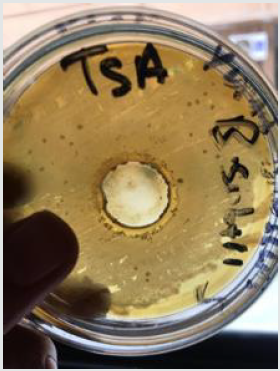
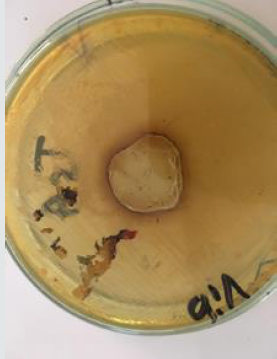
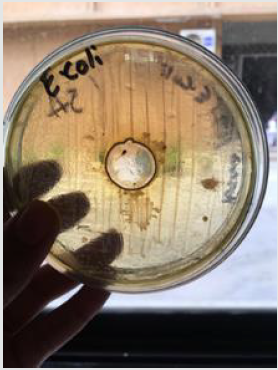
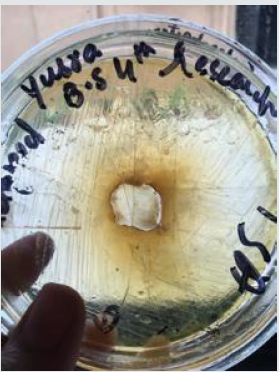
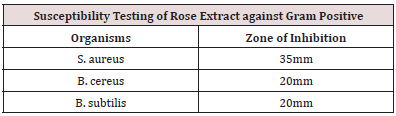
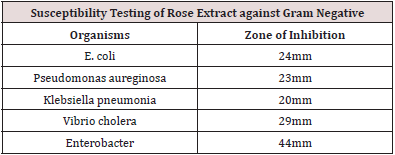
Antimicrobial agents are defined as those substances which possess inhibitory effects against gram-positive and gram-negative bacteria, preventing their growth. Antibacterial agents are classified based on the type of action, source of antibacterial agent, and range of the spectrum. Rose belongs to the family Rosaceae. Hundred (n=100) species of roses are locally available. Roses are native primarily to the temperate regions of the Northern Hemisphere. There is a wide variety of colors available in roses which enhances the beauty of the rose. Most roses are locally available in Asia, North America and few are available in Europe. Many parts of rose have been used to check the antibacterial and antifungal property and they are highly active to remove toxins from the body and shown positive results to inhibit the growth of bacteria. Different parts of rose can be used separately against bacteria. Rose extract can also be used to treat sore throat and to relieve chest congestion. The agents which are responsible for the antibacterial and antifungal properties of the rose extract are flavonoid and phenolic compounds. The rose petals are powdered and mixed in distilled water and concentrated using a rotary evaporator. Pure cultures were swabbed on MHA plates and wells were made using sterile borer by agar well diffusion method. Twenty (20ul) of the extract was added in well and incubated at 37°C for 24 hours. Next day zone of inhibition was observed. To compare the activity of rose extract with amikacin, pure cultures were swabbed on MHA and amikacin disk was placed on each plate. Next day zones were observed. Rose extract has shown maximum inhibitory effects against Staphylococcus aureus whereas the inhibitory effects against Bacillus cereus, Bacillus subtilis, and Klebsiella pneumoniaewere not satisfactory. We have also observed that Vibrio cholera also showed sensitivity to rose extract whereas E.coli and Pseudomonas aureginosagave intermediate zones, therefore we suggest that we can use rose extract against Staph aureus, E.coli, Pseudomonas aureginosa and Vibrio cholera.

Keywords: Rose extract; Antibacterial activity; Sensitivity; Resistance; Disc diffusion

Introduction

Rose belongs to the family Rosaceae. Hundred (n=100) species of roses are locally available. Roses are native primarily to the temperate regions of the Northern Hemisphere. There is a wide variety of colors available in roses which enhances the beauty of the rose. Most roses are locally available in Asia, North America and few are available in Europe. There are so many important components of rose which plays an important role in the antibacterial activity of rose. Among them, the components which possess antibacterial activity are flavonoids, terpenes, anthocyanins. Flavonoids are classified as natural plant compounds usually they are secondary metabolites of plants with various phenolic structures saulriuzcruz et al. [1]. They have many properties that help to treat cancer Alzheimer’s disease like they pose biochemical and antioxidant effects, antimutagenic effect, anticarcinogenic effects, etc. A.N Panche et al. [2]. They are extracted from plants and are classified as a low molecular weight compound. Rose, onion is the major source of flavonoids Aleksandra et al. [3]. Apart from antibacterial and antifungal properties, flavonoids are also responsible for color and aroma production in flowersDr. Nicola. [4].They are helpful for plants in a way that they act as a UV filter which protects the DNA of plant from UV radiations Burak M et al. [5]. Classification is done based on C ring which contains carbonCalhoun et al. [6].Terpene is a biological compound present in the rose flower. Terpenes have great industrial and pharmaceutical usage. In food industries, it is used as a flavoring agent or fragrancing agent. Pharmaceutical industries have medicinal uses of terpeneJiang z et al. [7]. Concentrates in ongoing decades have shown that terpenes apply anti-inflammatory impacts by hindering different proinflammatory pathways. Terpenes have been shown to exert activity against cancer and tumorsCho KS et al. [8].

Anthocyanins belong to flavonoids class which includes a subset of the polyphenol. Red, blue, and purple shades of organic products, vegetables, grains, blossoms, and herbs are due to anthocyanin. Anthocyanin is a Greek word, anthos means to bloom and kyanos means blue. Anthocyanins are transcendently found in nature as glycosides of polyhydroxy and polymethoxy subordinates of 2-phenyl-benzopyryliurn or flavylium salts. They are separated by the quantity of hydroxyl and methoxyl types of the B-ring, by the number of sugars connected to the aglycon and the situation of connection, and by the nature and number of aliphatic or aromatic acids appended to the sugar deposits welch et al. [9]. In a past report, quiniccorrosiv, 5-hydroxymethylfurfural, pyrogallol, levoglucosan, and 4H-pyran-4- one, 2, 3-dihydro-3, 5-dihydroxy-6-methyl were the major distinguished segments in methanolic concentrate of R. indica petals. In like manner, another examination demonstrated that unstable oils of new blooms of R. Damascena, for the most part, have citronellol, geraniol, nonadecane, and heneicosane in the fundamental oil, while they have alcoholic segments, citronellol and geraniol in rose water portion bai S. et al. [10].

Several studies have been done on rose and its products. It was found that several diseases can be treated with rose products and rose extracts. A recent study was done to check the antiviral activity of rose flower. In this research rose petals extract were made with water and ethanol separately. Now, this extract used against HIV. Rose petals extract showed antiviral activity against HIV. It inhibits the activity of HIV by interfering in replication at different stages. A common flavonoid known as kaempferol found in rose petals inhibits the activity of viral proteasesPonvelayutham et al.[11] Mahmood n, et al.[12]. Rose extract also used against several bacterial species to treat various bacterial infections. It is effective against both gram-positive and gram-negative bacteria. But on the other hand, several rose species possess no antibacterial activity, it includes Bulgarian roseKalemba d et al. [13]. When the rose extract was made with different solutions it shows that rose extract along with petroleum ether showed great antibacterial activity as compared to rose extract with water or ethanolhirulkar n,b [14]. Without a doubt, the antimicrobial action of rose concentrates particularly rose fundamental oil is identified with compound segments particularly geraniol, citronellol and nerol or interdependent impacts between these segments. The antibacterial and antifungal exercises of geraniol were affirmed against an enormous number of microorganisms. Likewise, the interdependent impact between citronellol, geraniol and nerol were shown against Gram-positive, Gram-negative bacteria. On the other hand, the antimicrobial movement of rose concentrates is identified with compound parts of concentrates and their interdependent or adversarial impactsandogan B.C et al. [15]. Several compositions of the rose extract showed anti-cancerous activity. The geraniol as the fundamental mixes of R. Damascena'sacts using various systems. It causes the apoptosis in malignant growth cells and expands the outflow of apoptotic protein Bak-47 captures the G0/G1 period of cell cycle and diminishes cdk2 activity, restrains the 3-hydroxy-3-methylglutaryl-CoA (HMG-CoA) reductase and ornithine decarboxylase activity that at last causes the passing in diseased cells Elson C, E [16]. Rose extract also showed antidepressant activity.R. Damascenausing animating the β-adrenergic receptors repressing the histamine H1 receptors and obstructing the calcium channels of the tracheal chain, hindering the KCl-related withdrawal and electrical field incitement thus acts as a relaxant boskabady m. et al.[17]. The antidepressant impacts of R. Damascenafluid concentrate were affirmed in animal models. Rose total shows the energizer movement by diminishing the lipid peroxidation and expanding the cancer prevention agents in the cerebral cortex. As referenced previously, it is accepted that rose fundamental oil and rose water bring joy, fearlessness and are known as an erotic and sexual enhancer. It has been affirmed that rose fundamental oil used in infertility and drive through expanding the widths of seminiferous tubules, sperm check, and motility and upgrading the testosterone production. Furthermore, the organization of rose basic oil improves sexual brokenness and manifestations of depression in male patients experiencing significant depression issuesFarina v et al. [18]. Rose extract also showed antioxidant activity. Phenolic compounds and flavonoids are responsible for the antioxidant activity of rose. The advantages impact of rose fundamental oil against formaldehyde inward breath on the reproductive system are identified with the cancer prevention agent movement of rose basic oil.

Material and Methods

Sample collection

The rose petals were collected from the local flower market. The petals were dried under shade for 1 week, pulverized into fine particles Devyani Bahl et al. [19].

Preparation of rose extract

The petals were dried under shade for 1 week, pulverized into fine particles by using a home chopper machine. The extract was prepared using distilled water. 200g of fine powder of rose petal was mixed in distilled water. Then it was concentrated using a rotary evaporator. The mixture was strained using Whatman filter paper and was placed on the funnel to obtain a filtrate. The filtrate was refrigerated for further use.

Identification of Cultures and Biochemical Testing

Biochemical tests are the tests utilized for the recognizable proof of microscopic organism’s species dependent on the distinctions in the biochemical characteristics of various microorganisms. The biochemical test used for gram-positive strains is catalase, oxidase, coagulase, and urease. Catalase test is utilized to distinguish bacteria that produce the catalase. This catalyst detoxifies hydrogen peroxide by separating it into water and oxygen gas. Coagulase test is used to check the ability of an organism to clot blood plasma. Oxidase test is used to check the presence of an enzyme cytochrome oxidase that transfers electron in the electron transport chain. A urease test is done to identify that an organism can utilize urea or not. As a result of the breakdown of urea, ammonia is produced. For gram-negative organisms, the IMVIC test is used. IMVIC test contains an indole test, methyl red test, Voges Proskauer test and citrate test. Along with IMVIC, the TSI test is also performed. TSI is a triple sugar iron test in which an organism utilizes sugar and produced hydrogen sulfide

Antibacterial activity/susceptibility testing

To assess the antibacterial activity of the rose extract, eight cultures were collected from the known clinical laboratory of Karachi. Gram-positive cultures include S.aureus, B.cereus, B.subtilis. Gram-negative cultures include Pseudomonas aeruginosa, Vibrio cholera, E.coli, Klebsiella pneumonia, Enterobacter.They were all gram stained and confirmed by biochemical testing and then they were cultured on nutrient agar plates and preserved for further use.

The antibacterial activity of the rose extract was analyzed against these isolates by using Tryptic Soy Agar (TSA) plates, by agar well diffusion technique. Pure culture of test organism is transferred into 5ml nutrient broth, incubated for 24 hours at 37 °C and the test strain was swabbed on TSA plates. Well were made using sterile borer. 20ul of the filtrate was added in well. The plates were then incubated for the formation of zones.

Comparative analysis of rose extract with antimicrobial agent

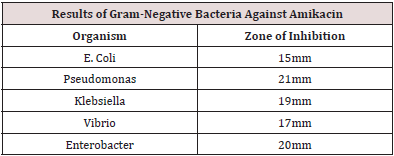
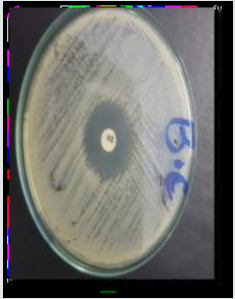
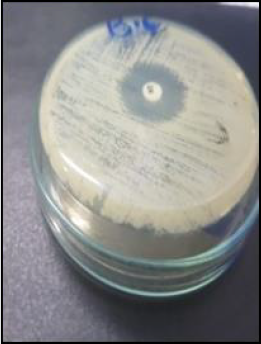
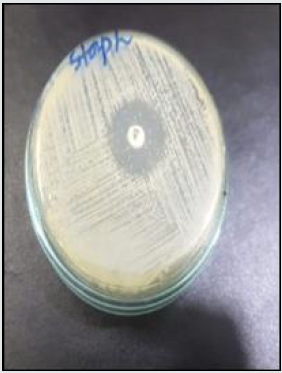
For comparative analysis, we have tested the strains by Kirby Buer disc diffusion test in which we had used amikacin for comparison with rose extract. Amikacin disc was placed against these isolates on MHA plates. The plates were then incubated for the formation of zones.

Results

Identification of test organism

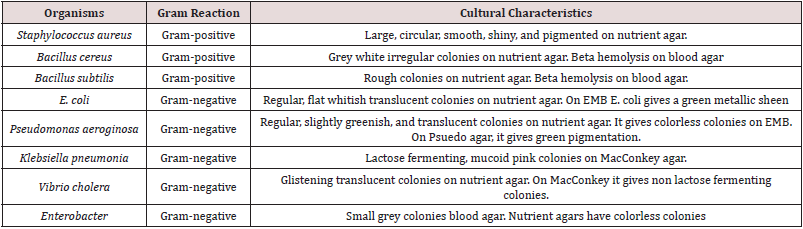
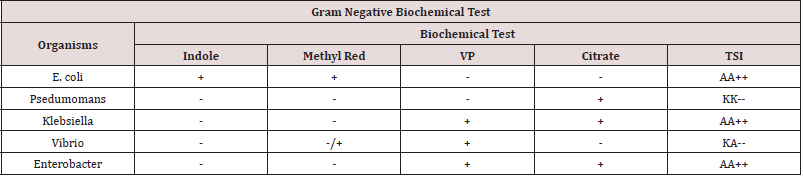
The test organism was identified based on by gram reaction of isolates, cultural characteristics, and biochemical tests such as IMVIC, TSI (Table 1-3).

Table 1: Morphological and cultural characteristics of identified strains.

Lupinepublishers-openaccess-complementary-alternative-medicine-journal

Table 2: Biochemical characteristics of gram-positive strains.

Lupinepublishers-openaccess-complementary-alternative-medicine-journal

Table 3: Biochemical characteristics of gram-negative strains.

Lupinepublishers-openaccess-complementary-alternative-medicine-journal

Antibacterial activity assay

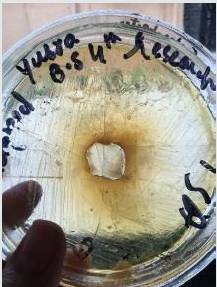
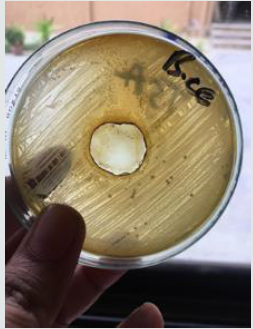
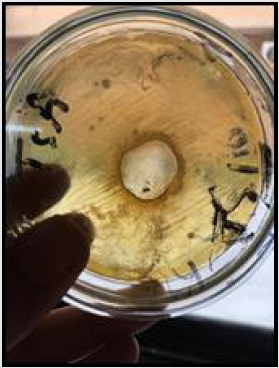
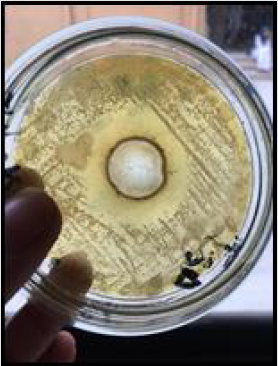
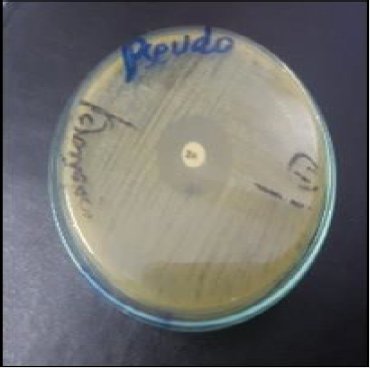
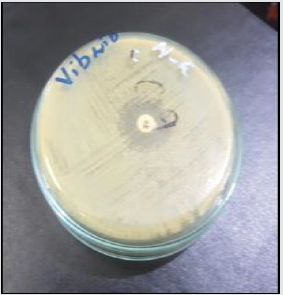
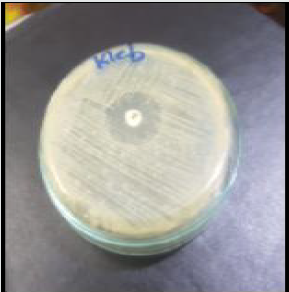
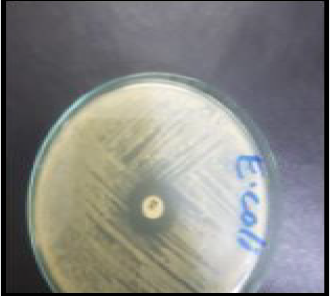
The antibacterial activity is checked against all seven test organisms. The results of the zone of inhibition showed in Table 4 and Figure 1-3. Table 5 and Figure 4-8.

Figure 1: Staph. aureus

Lupinepublishers-openaccess-complementary-alternative-medicine-journal

Figure 2: B. cereus

Lupinepublishers-openaccess-complementary-alternative-medicine-journal

Figure 3: B. subtilis

Lupinepublishers-openaccess-complementary-alternative-medicine-journal

Figure 4: Vibrio cholera

Lupinepublishers-openaccess-complementary-alternative-medicine-journal

Figure 5: E.coli

Lupinepublishers-openaccess-complementary-alternative-medicine-journal

Figure 6: P aureginosa

Lupinepublishers-openaccess-complementary-alternative-medicine-journal

Figure 7: K. pneumonia

Lupinepublishers-openaccess-complementary-alternative-medicine-journal

Figure 8: Enterobacter

Lupinepublishers-openaccess-complementary-alternative-medicine-journal

Table 4:

Lupinepublishers-openaccess-complementary-alternative-medicine-journal

Table 5:

Lupinepublishers-openaccess-complementary-alternative-medicine-journal

Antibiotic susceptibility testing

Table 6 and Figure 9-11.
Table 7 and Figure 12-16.

Table 6:

Lupinepublishers-openaccess-complementary-alternative-medicine-journal

Table 7:

Lupinepublishers-openaccess-complementary-alternative-medicine-journal

Figure 9: Bacillus cereus

Lupinepublishers-openaccess-complementary-alternative-medicine-journal

Figure 10: Bacillus subtilis

Lupinepublishers-openaccess-complementary-alternative-medicine-journal

Figure 11: Staph aureus

Lupinepublishers-openaccess-complementary-alternative-medicine-journal

Figure 12: P. aeroginosa

Lupinepublishers-openaccess-complementary-alternative-medicine-journal

Figure 13: Vibrio cholera

Lupinepublishers-openaccess-complementary-alternative-medicine-journal

Figure 14: K.pneumoniae

Lupinepublishers-openaccess-complementary-alternative-medicine-journal

Figure 15: E.coli

Lupinepublishers-openaccess-complementary-alternative-medicine-journal

Figure 16: Enterobacter

Lupinepublishers-openaccess-complementary-alternative-medicine-journal

Discussion

Pathogenic microorganisms are the major cause of infectious illness worldwide because of their resistance ability. Today the most important need is the discovery of those natural agents that have the potential to kill or inhibit the growth of the microorganism and should have no toxic effects on the human body after consumption. Several types of research have been conducted to fulfill the requirement of the discovery of natural compounds. The traditional use of plants as medicines provide the basis for indicating which plant extract could be useful for specific medical conditions. In the past, many plant extracts such as rose extract, tea extract, clove extract have been used as an antibacterial agent which may help to treat several infections. It is important to investigate that the natural plants which possess antimicrobial activity can be used for large group or pathogens or not. Several studies have been conducted to check the antibacterial activity of various plants extract to prove that either they are helpful to treat various infections or not.

The present study represents the antibacterial activity of the rose extract. This plant contains a few parts, for example, terpenes, glycosides, flavonoids, and anthocyanins that affect the health of humans. The pharmacological impacts of R. damascene are vast. The majority of the CNS impacts are sleep-inducing, pain-relieving, and anticonvulsant impacts. The respiratory, cardiovascular, purgative, antidiabetic, antimicrobial, hostile to HIV, calming, and cancer prevention agent are different impacts of this plant. It is recommended that lipid dissolvable (non-polar) constituents of this plant are principally responsible for the vast majority of the previously mentioned impacts. According to results, the rose extract showed the highest activity against Enterobacter, S. aurus and vibrio cholera. But rose extract also showed activity against other tested microbes but to a lower extent.

To compare the activity of rose extract with an antibiotic, we selected amikacin to compare the antibacterial and antifungal activity. Amikacin is a novel antibiotic because it gives the best results against Pseudo and drug-resistant bacilli. It also showed activity against all tested strains.

Conclusion

This study shows there are many compounds present in rose flowers that possess antibacterial activity so it has confirmed that rose extract could be used for the treatment of various infections including multidrug-resistant staph aureus infections. Further studies should be done for antimicrobial screening of this product so that it can use in health care needs.

Authors’ Contributions

Conceived and designed the experiments: T Malik, Performed the experiments: Y Safdar, Analyzed the data: T Malik & Y Safdar contributed reagents/ materials/ analysis tools: T Malik & Y Safdar, Wrote the paper: Y Safdar.


For More Lupine Publishers Open Access Journals Please visit our Website:
To Know More About Open Access Publishers Please Click on Lupine Publishers

Follow on Twitter:  https://twitter.com/lupine_online

https://lupinepublishers.com/complementary-alternative-medicine-journal/fulltext/antibacterial-activity-of-the-rose-extract.ID.000144.php

Friday, September 18, 2020

Lupine Publishers | Phytochemical and Antioxidant Activities of Different Fractional Extracts of Alstonia scholaris Linn

 Lupine Publishers | Open access Journal of Complimentary and Alternative Medicine


Alstonia scholaris Linn is popularly known as the “Chatim” or the Devil tree, which are used as a well-known remedy for the treatment of various types of disorders in the Ayurvedic, Homoeopathic and Folklore system of medicine in Bangladesh, India and many others countries. Alstonia scholaris is mainly used for the treatment of diarrhoea and malaria as a tonic, febrifuge, emmenagogue, anticholeric and vulnerary. Considering the medical importance and source of origin, the plant Alstonia scholaris has been subjected for fractionation with different solvents. The different fractions of ethanolic extract of Alstonia scholaris were evaluated for antioxidant activity as well as biological activity. Phytochemical properties of leaves of Alstonia scholaris were also investigated. The different solvent fractions showed the presence of tannins, glycosides, steroids, and alkaloids. The different fractions of ethanolic extract of Alstonia scholaris were evaluated for the total phenolic content, total flavonoid content, reducing power capacity, total antioxidant activity and DPPH radical scavenging activity. From the result on the various antioxidant activity tests, it was found that Dia-ion resin adsorbed fraction showed the highest value, followed by petroleum ether fraction, ethyl acetate fraction and chloroform fraction. Overall results of the antioxidant evaluation and various biological screening tests were found satisfactory and may encourage researcher to use this plant as a source of potent antioxidant food material as well as bioactive toxic compounds to be used in therapeutic drugs preparation.

Keywords: Phytochemistry; Antioxidant Activities; Alstonia scholaris; Chloroform

Introduction

Plant kingdom is a mysterious world of chemical compounds and mainly organic compounds. The nature abounds in organic compounds of every conceivable structural class. The cells of living organisms, plants, fungi, other animals are the sites of complex biosynthetics that result in the formation of many varieties of organic compounds; many of them are of great importance to mankind [1]. This is why the modern world is interestingly tending to go back to the pre- industrialized days, when the mankind used to depend on the plant kingdom for their food, shelter, medicine, and other essential commodities. This is perhaps, the only way to protect the ecological balance. The raw materials of the plant kingdom as mentioned above are directly or indirectly produced by the plants but are very seldom used by themselves and serve human beings in many ways. These are called the secondary metabolites or the natural products [2]. By the metabolic activity of plants produces not only the food materials so essential for sustenance of the life of animals but also certain other substances, such as alkaloids, vitamins, glycosides, toxalbumins, essential oils, resins, bitter principles etc. which are necessary for growth, maintenance and protection of life [3].

Many of these are essential for metabolic activities [4], many are medicines to human and animal life. Many of these are harmful to animal life, at least under certain conditions. Plants containing medicinal properties are commonly known as medicinal plants. The plants containing these principles are capable of acting deleteriously, are popularly known as poisonous plants. A poisonous plant is one which, as a whole or as a part thereof, under all or certain conditions, and in a manner and in amount likely to be taken or by brought into contact with an organism, ‘will exert harmful effects or cause death either immediately or by reason of cumulative action of the toxic property, due to the presence of known or unknown chemical substances in it [5].

Although some of these plants are once poisons, medicines and food or fodder. The genus Alstonia belongs to the family Apocynaceae. It includes totally 43 species of which two species namely, A. scholaris (L.) R. Br. and A. venenata R. Br. are represented in South India [6]. These two species can be identified with their habits, shape and texture of the leaves, fruit size and papilla of the seeds The bark of Alstonia scholaris L is bitter, astringent, acrid, thermogenic, digestive, laxative, anthelmintic, febrifuge, antipyretic, depurative, galactogogue, stomachic, cardiotonic and tonic [7]. When these plants are used in herbal formulations, their botanical identity needs to be established beyond any ambiguity [8]. It has been found an important medicinal plant and addressed by scientist from various countries [9]. But in our country, this plant has not been studied in detail till now. Plant constituents are found different in quantity as well as in structure when collected from different sources.

Methods and Materials

All the reagents and chemicals were used for the presence work were purchased from THOMAS BAKER (MUMBAI, INDIA), BDH (ENGLAND), FLUKA (SWITZERLAND) and E. MERCK (GERMANY). Commercial alcohol (rectified spirit) and absolute alcohol were available from Carew and company, Darsana, Chuadanga. The Solvents used mainly in this work are benzene, acetone, tetrahydrofuran (THF), ethyl acetate, chloroform, n-hexane, petroleum ether, methanol, absolute alcohol, toluene etc. The solvents were dried and distilled when necessary.

During the present work solvents were purified priors to use by distillation at the boiling point at the respective solvents. Evaporation of solvents from the extracts and other solutions were carried out on a rotary evaporator under reduced pressure of bath temperature not exceeding 40 °C. The purity of the compounds were tasted by analytical thin layer chromatography (TLC) on silica-gel plate and the Spots were made visible either by exposing it under UV lamp or iodine vapour or by spraying with the some suitable spray reagents, if it is not visible in the day light.

All evaporations were carried out under reduced pressure using a Rotary Vacuum Evaporator (rotavapour) on water bath temperature was not exceeding 40 °C. Smaller volume of non-aqueous solvents were removed by keeping in open air. Crystallization was employed as a final purification process. The solvent was chosen in which the compound was least soluble. The compound was dissolved in a minimum volume at a solvent in hot condition and was left for crystallization. Sometimes mixture of solvents was also used. The Alstonia scholaris plant leaves were collected from the cultivated adjacent areas of BCSIR, Rajshahi. The collected leaves were washed with water.

100g of fresh leaves were taken for the determination of water content. Then the fresh leaves (100g) were dried at room temperature and the dried leaves were weighted again and that was 37g. Therefore, the water content of the leaves of Alstonia scholaris was calculated below:

Dried ground of Alstonia scholaris leaves (W1=1.5802g) were heated at 105 °C until a constant weight was reached (W2 = 1.4562g) and the moisture content was determined.

Moisture content =

= 7.84%

Dried ground Alstonia scholaris leaves contain 63% water content and 7.84% moisture content. Thus, the dry matter of Alstonia scholaris given below:

Dry matter = 100 – (63+ 7.84)= 29.16%

Process of Extraction

The collected materials were washed thoroughly in water, chopped, air dried for a week at 35-40 °C and pulverized in electric grinder. Dried ground leaves of Alstonia scholaris were exhaustively extracted with ethanol (EtOH, Analytical Grade, BDH Laboratory Supplies) in Soxhlet apparatus. The resulting juicy extract was filtered through Whatman paper No.1 and concentrated under reduced pressure at 45 °C using the Buchi Rotavapor R-200 to obtain a crude residue (23.5%).The process have done for several time to increase the crude extract. Then water triturate part was collected from crude extract. The water triturate fraction was passed through a previously well packed Dia-ion resin column which has selectivity to collect only the phenolic group containing compounds. Then the materials, which were bound in resin column, collected by passing methanol solvent. Then Petroleum ether, Ethyl acetate and Chloroform solvents were passing through the residue respectively. Finally, Petroleum ether, Ethyl acetate and Chloroform triturate were collected.

Total phenolic content of different extractives of Alstonia scholaris were determined employing the method as described by involving Folin-Ciocalteu reagent as oxidizing agent and Gallic acid as standard [10].

Determination of Total Antioxidant Activity

1. 0.5mL of plant extract or standard of different concentration solution was taken in a test tube.

2. 3mL of reaction mixture containing 0.6M sulphuric acid, 28mM sodium phosphate and 1% ammonium molybdate was added into the test tube.

3. The test tube was incubated at 95 °C for 10 minutes to complete the reaction.

4. Then the absorbance of the solution was measured at 695nm using a spectrophotometer against blank after cooling at room temperature.

5. A typical blank solution contained 3mL reaction mixture and the appropriate volume (300μL) of the same solvent used for the sample, and it was incubated under the same conditions as the rest of the sample’s solution.

Determination of Dpph Radical Scavenging Activity

1. 2mL of methanol solution of plant extract or standard at different concentration was taken in a test tube.

2. 3mL of methanol solution of DPPH was added into the test tube.

3. The test tube was incubated at room temperature for 30 minutes in dark place to complete the reaction.

4. Then the absorbance of the solution was measured at 517nm using a spectrophotometer against blank.

5. A typical blank solution contained all reagents except plant extract or standard solution.

6. The percentage (%) of scavenging was calculated from the following equation.

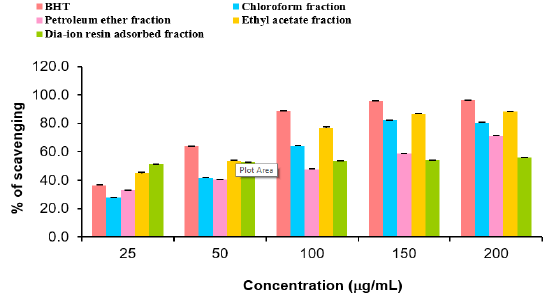
% of scavenging = {(Ao – A1)/Ao} X 100

Where,

Ao is the absorbance of the control and

A1 is the absorbance of the extract/ standard.

Then % of scavenging were plotted against concentration and from the graph IC50 was calculated.

Results & Discussion

Phytochemical screening of crude ethanol and four subfractions of the leaves of Alstonia scholaris Table 1.

Table 1: Phytochemical screening of crude ethanol and four sub-fractions of the leaves of Alstonia scholaris.

Lupinepublishers-openaccess-complementary-alternative-medicine-journal

Here, + = Present in the mild amount, + + = Present in the moderate amount, + + + = Present in the large amount, − = Not present.

Total phenolic content

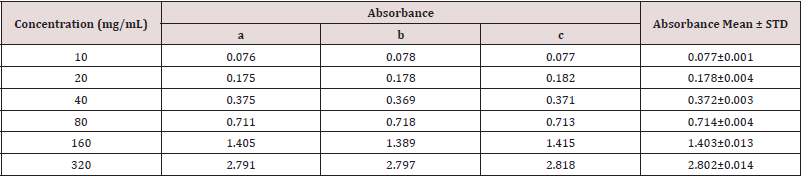
Absorbance of Gallic acid at different concentrations for the determination of total phenolic content (Table 2).

Table 2: Absorbance of Gallic acid at different concentrations for the determination of total phenolic content.
Lupinepublishers-openaccess-complementary-alternative-medicine-journal

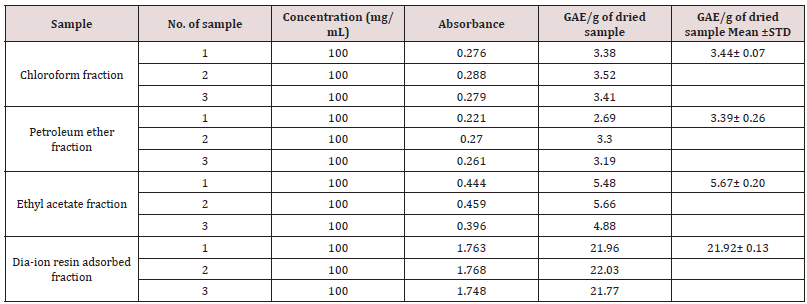
Determination of total phenolic content of different fractions of ethanolic extract of Alstonia scholaris (Table 3).

Table 3: Determination of total phenolic content of different fractions of ethanolic extract of Alstonia scholaris.
Lupinepublishers-openaccess-complementary-alternative-medicine-journal

Total phenolic content of different fractions of Alstonia scholaris were shown in Table 5 and Figure 2. Among the fraction, the highest phenolic content was found in Dia-ion resin adsorbed fraction (21.92± 0.13mg Gallic acid/g of extract), followed by ethyl acetate fraction (5.67± 0.20mg Gallic acid/g of extract), Chloroform fraction (3.44± 0.07mg Gallic acid/g of extract), and Petroleum ether fraction (3.39± 0.26mg Gallic acid/g of extract) (Figure 1).

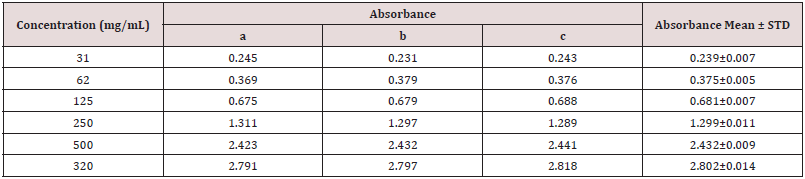
Table 4: Absorbance of catechin at different concentration for the determination of total flavonoids.
Lupinepublishers-openaccess-complementary-alternative-medicine-journal

Table 5: Determination of total flavonoid content of different fractions of ethanolic extract of Alstonia scholaris.
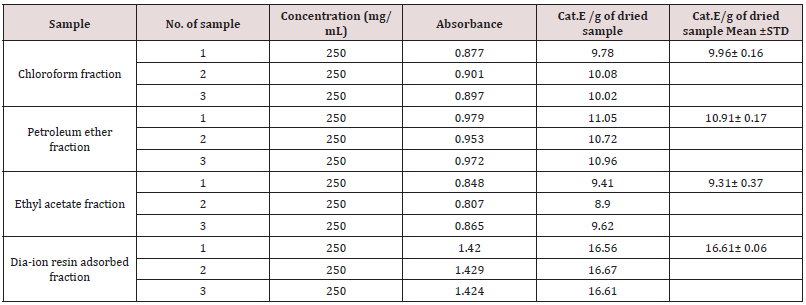
Lupinepublishers-openaccess-complementary-alternative-medicine-journal

Figure 1: Total phenolic content (mg/g plant extract in gallic acid equivalent) of Alstonia scholaris.
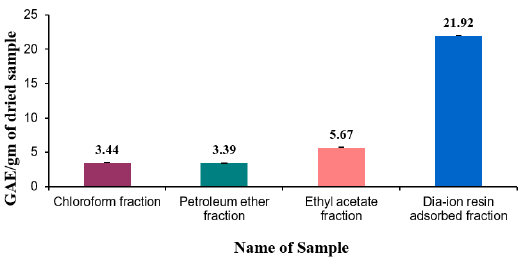
Lupinepublishers-openaccess-complementary-alternative-medicine-journal

Figure 2: Total flavonoid content (mg/g plant extract in catechin equivalent) of Alstonia scholaris.
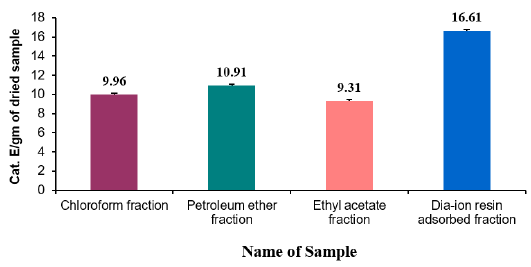
Lupinepublishers-openaccess-complementary-alternative-medicine-journal

Total Flavonoid Content

Absorbance of catechin at different concentration for the determination of total flavonoids (Table 4).

Determination of total flavonoid content of different fractions of ethanolic extract of Alstonia scholaris (Table 5).

Total flavonoid content of different fractions of Alstonia scholaris were show in Table 7 and Figure 2. Among the fraction, the highest total flavonoid content was found in Dia-ion resin adsorbed fraction (16.61± 0.06mg Catechin/g of extract), followed by Petroleum ether fraction (10.91± 0.17mg Catechin/g of extract), Chloroform fraction (9.96±0.16mg Catechin/g of extract), and Ethyl acetate fraction (9.31±0.37mg Catechin/g of extract) (Figure 2).

Table 6: Reducing power capacity of different fractions of ethanolic extract of Alstonia scholaris and Ascorbic acid (standard) at different concentrations.
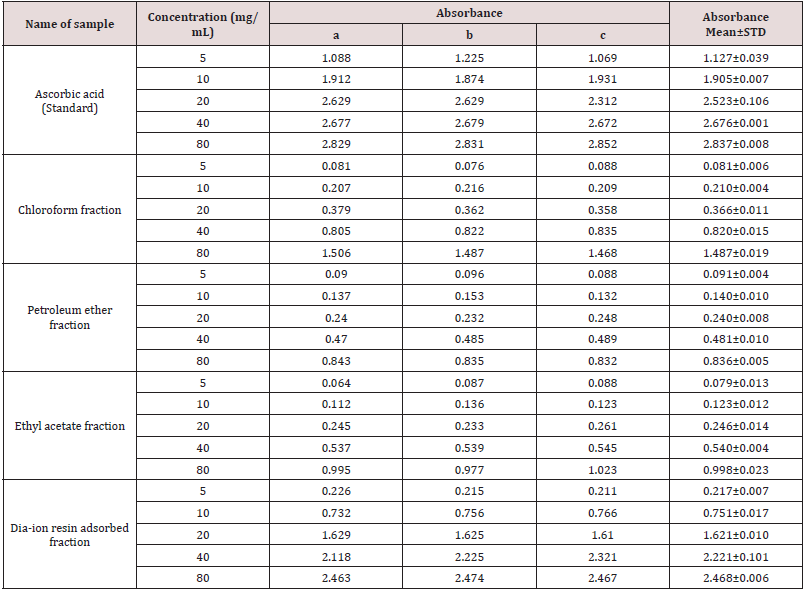
Lupinepublishers-openaccess-complementary-alternative-medicine-journal

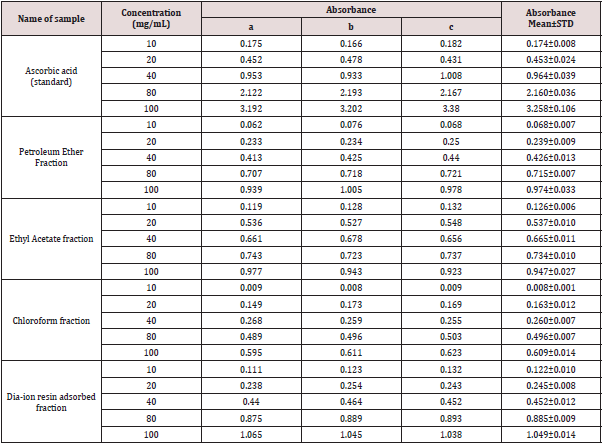
Table 7: Total antioxidant activity of different fractions of Alstonia scholaris and Ascorbic acid (standard) at different concentrations.
Lupinepublishers-openaccess-complementary-alternative-medicine-journal

Reducing Power Capacity Content

Reducing power capacity of different fractions of ethanolic extract of Alstonia scholaris and Ascorbic acid (standard) at different concentrations (Table 6).

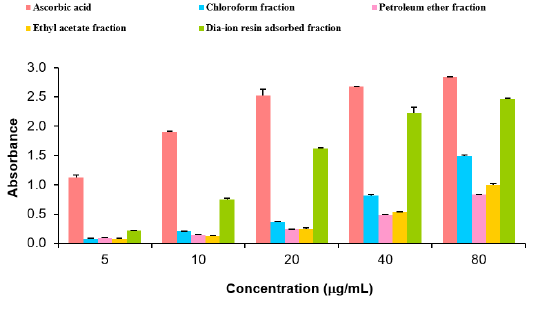
The iron reducing capacity of the four different fractions of Alstonia scholaris extract such as petroleum ether fraction, chloroform fraction ethyl acetate and Dia-ion resin adsorbed fraction have been investigated. Among the four different extractives Dia-ion resin adsorbed fraction showed the highest iron reducing capacity with absorbance of 2.468±0.006 at 80μg/mL concentration, followed by Chloroform fraction with absorbance 1.487±0.019 at 80μg/mL, while Ethyl acetate fraction showed iron reducing capacity with absorbance of 0.998±0.023 at 80μg/mL and Petroleum ether fraction showed the iron reducing capacity with absorbance 0.836±0.005 at 80μg/mL (Figure 3).

Figure 3: Reducing power capacity of different fractions of ethanolic extract of Alstonia scholaris and Ascorbic acid (Standard).
Lupinepublishers-openaccess-complementary-alternative-medicine-journal

The reducing power of the different extractives and standard exhibited the following order:

Ascorbic acid> DRAF > CLF > EAF > PEF

Total Flavonoid Content

Total antioxidant activity of different fractions of Alstonia scholaris and Ascorbic acid (standard) at different concentrations (Table 7).

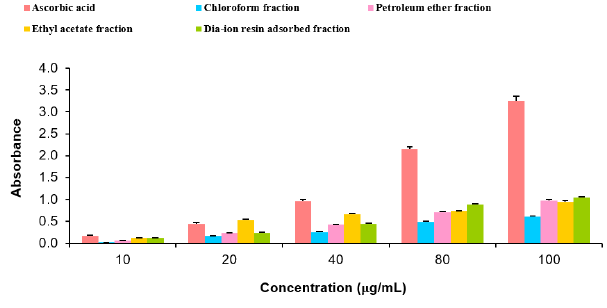
Total antioxidant activity of different fractions of ethanolic extract of Alstonia scholaris such as Dia-ion resin adsorbed fraction, chloroform fraction, Ethyl acetate fraction and petroleum ether fraction were investigated. Among the fractions, Dia-ion resin adsorbed fraction showed the highest total antioxidant activity with absorbance 1.049±0.014 at 100μg/mL. Whereas the Petroleum ether and Ethyl acetate fraction showed the absorbance 0.974±0.033 at 100μg/mL and 0.947±0.027 at 100μg/ mL respectively. Chloroform fraction showed the lowest total antioxidant activity with absorbance 0.609±0.014 at 100μg/mL concentration (Figure 4).

Figure 4: Total antioxidant activity of different fractions of ethanolic extract of Alstonia scholaris and Ascorbic acid (Standard).
Lupinepublishers-openaccess-complementary-alternative-medicine-journal

The total antioxidant activity of different extractives and standard exhibited the following order:

Ascorbic acid> DRAF > PEF > EAF > CLF

DPPH Radical Scavenging Activity

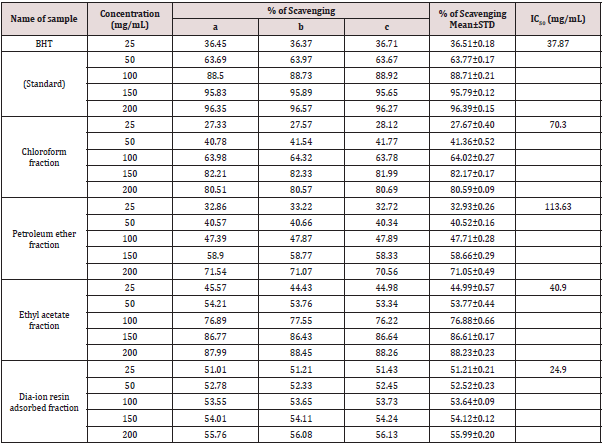
DPPH radial scavenging activity of different fractions of ethanolic extract of Alstonia scholaris and BHT (standard) at different concentrations (Table 8).

Table 8: DPPH radial scavenging activity of different fractions of ethanolic extract of Alstonia scholaris and BHT (standard) at different concentrations.
Lupinepublishers-openaccess-complementary-alternative-medicine-journal

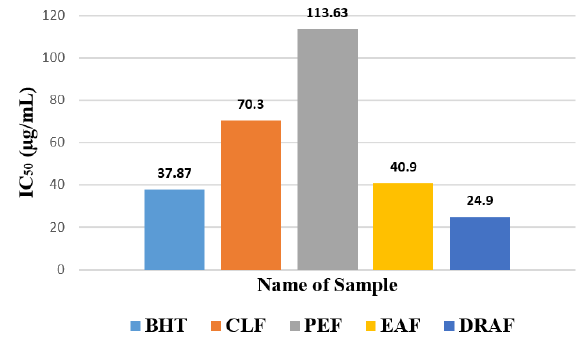
Among the fractions of the extract, highest DPPH radical scavenging activity was found in Dia-ion resin adsorbed fraction having IC50 value 24.90μg/mL. On the other hand, chloroform fraction showed DPPH radical scavenging activity with IC50 value 73.30μg/mL, followed by ethyl acetate fraction with IC50 value 40.90μg/mL and petroleum ether fraction showed DPPH radical scavenging activity with IC50 value 113.63μg/mL.

From the above results, we can conclude that, Dia-ion resin adsorbed fraction shows the highest activity in Total phenolic content, Total flavonoid content, Total antioxidant and DPPH radical scavenging (Figure 5 & 6).

Figure 5: DPPH radical scavenging activity of different fractions of ethanolic extract of Alstonia scholaris and BHT (standard).
Lupinepublishers-openaccess-complementary-alternative-medicine-journal

Figure 6: IC50 (g/ml) of different extractives of Alstonia scholaris for free redical scavenging activity by DPPH radical.
Lupinepublishers-openaccess-complementary-alternative-medicine-journal

Conclusion

The present study investigated the plant Alstonia Scholaris for antioxidant evaluation and biological activity of different extractives. For this purpose, total phenolic content, total flavonoid content, total antioxidant, DPPH radical scavenging activity tests were performed with four different fractions of the plant. From the results of the antioxidant activity test, it is clearly seen that Diaion resin adsorbed fraction had the highest antioxidant activity. Considering the antioxidant activities assay of A. scholaris, it can be deduced that this plant contains useful potent bioactive toxic compounds, which can be harnessed and purified into useful therapeutic drugs. However, further studies are warranted for more extensive antioxidant and biological evaluations to elucidate before bringing them into commercial use.

For More Lupine Publishers Open Access Journals Please visit our Website:
To Know More About Open Access Publishers Please Click on Lupine Publishers

Follow on Twitter:  https://twitter.com/lupine_online

https://lupinepublishers.com/complementary-alternative-medicine-journal/fulltext/phytochemical-and-antioxidant-activities-of-different-fractional-extracts-of-alstonia-scholaris-linn.ID.000140.php

Smoking May Not Increase Systolic and Diastolic Blood Pressures

  Abstract Background: We tried to understand whether there are some effects of smoking on systolic and diastolic blood pressure...